

Graduation Collection
Collection Overview
Intervew with the designer
The 3 made looks in Detail

INTERVIEW with the Designer
What is the core idea behind UNFILTERED: perfectly flawed?
UNFILTERED: perfectly flawed begins at the moment when the image of perfection breaks. The collection questions the idea that mistakes are something purely negative and instead looks at them as part of being human. A mistake can create damage, but it can also become the beginning of reflection, growth and transformation. The project is not about romanticising failure, but about understanding that imperfection is not the opposite of beauty. It is often the place where something honest begins.
The collection follows seven emotional stages. Why was it important to build the story as a process?
The story unfolds through seven looks: Self Protection, Unspoken, The Mistake, Damage, Reflection, Acceptance and Carry On. This order reflects how a mistake can develop emotionally. It often starts with protection, with hiding something or not saying what should have been said. Then comes the mistake itself, the impact it leaves, and the moment of having to confront yourself. But the story does not end with damage. It continues through reflection, acceptance and the decision to move forward. For me, that was important because mistakes are not single moments. They are processes we carry, understand and eventually transform.
There is a very personal layer within the collection. How did your own experience shape the project?
A central part of the collection comes from a mistake that happened in my own life. I withheld a part of my life from someone and was not open from the beginning. In that moment, I placed my own self-protection above the trust of another person, and that caused hurt. I could not undo what happened, but I wrote a letter, partly to explain myself and partly to process what had happened. That letter became very important, both emotionally and aesthetically. It appears throughout the collection as a recurring detail and turns something deeply personal into a visible part of the design language.
The project also speaks about social media and self-presentation. What are you questioning through the collection?
The social core of the collection is the pressure of over-perfect self-presentation. We live in a culture where many people try to appear flawless, especially through social media. But this perfect image is not realistic. It often leaves no space for mistakes, regret or the uncomfortable parts of being human. With UNFILTERED: perfectly flawed, I wanted to show the opposite: that flaws are not something that always need to be hidden. The collection captures the instinct to conceal, the fear of being seen imperfectly, and the possibility of facing that truth instead of erasing it.
One of the more intimate design elements is handwriting. Why did you choose to include other people’s words in the pieces?
While working on the collection, I realised that mistakes mean something different to everyone. I did not want the story to stay only within my own experience. Through a survey, I collected anonymous words and statements from different people, without personal details but with emotional honesty. These handwritten words appear on the garments and bring the community into the collection. They make the pieces more personal, but also more universal. The collection becomes a shared archive of regret, protection, reflection and acceptance.
Your design principles include one-size, panels, circular shapes and minimal waste. How do these technical choices connect to the emotional story?
The construction of the garments follows the same idea as the story: nothing is fixed forever. Many pieces are adjustable, transformable or built through panels. The one-size approach allows garments to adapt to different bodies and needs, while the panel-based construction creates the possibility of taking something apart and reassembling it again. Spiral and circular shapes reference repetition, cycles and the feeling of being caught in a loop, emotionally, but also visually. Even the minimal-waste principle connects to the idea of carrying something forward. Fabric leftovers are kept and transformed into new textiles for an exclusive follow-up accessory capsule. In that way, nothing is simply thrown away. What remains still has value and can become something new.
click on the pictures for all details & information of the pieces


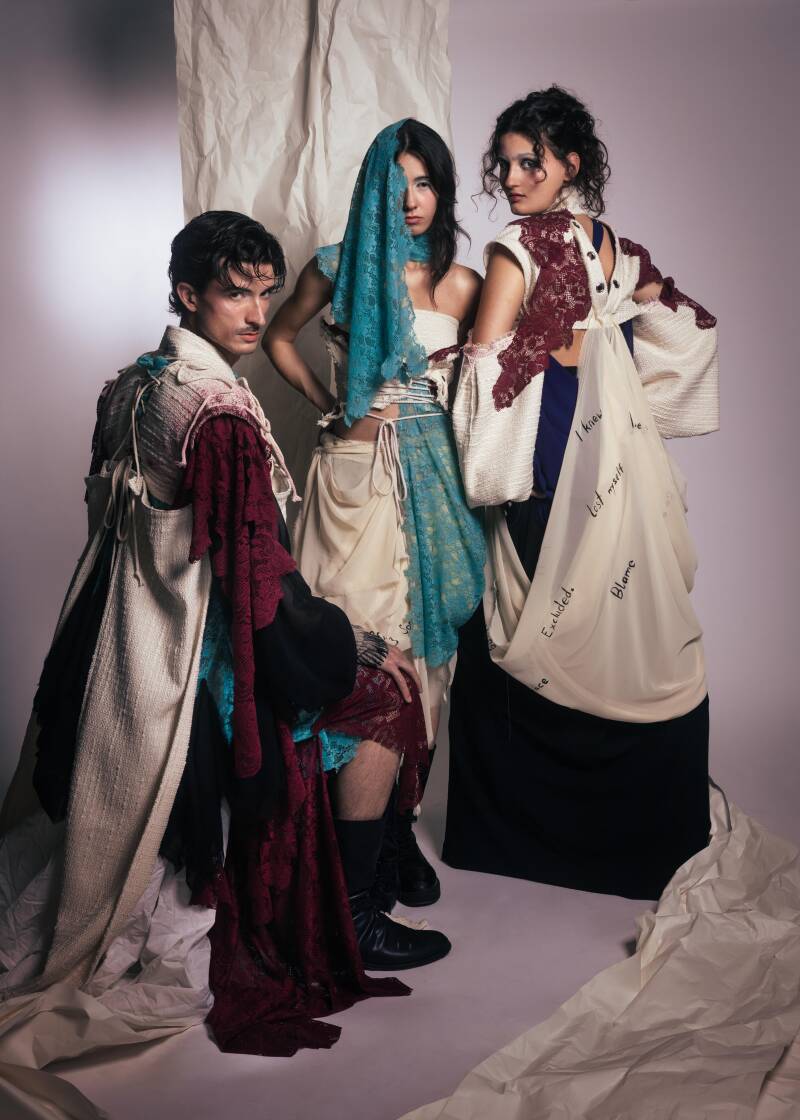
Graduation Collection of Alycia Gränacher
Atelier Gréna x STF (Schweizerische Textilfachschule)
Thanks to:
Sara Schaer
Andrea Krieg
Robert Herzog
PHOTOSHOOT:
MODELS:
LOOK 3 The Mistake Ronja Kimara,
LOOK 4 DAMAGE Andrea Reaninoragonesi,
LOOK 5 REFLECTION Anna-Sophia
HAIR AND MAKEUP: Pedja Krsmanović
PHOTOGRAPHER: Celine Luetolf
PHOTOSHOOT ORGANISATION: Noemi Furrer
Thanks to everyone who took the chance in the online survey to help me shape this collection.
Selected pieces from Unfiltered: Perfectly Flawed are available for shootings, editorials and creative productions upon request.
For rental inquiries and availability, please get in touch directly.